

Should I walk or run through rain to get less wet?
/Answer
In still air, run. When it’s windy, move with the rain, not against it.
Over the same route in steady vertical rain, running does not increase the total amount striking your front. Running reduces the time available for rain to land on your head and shoulders.
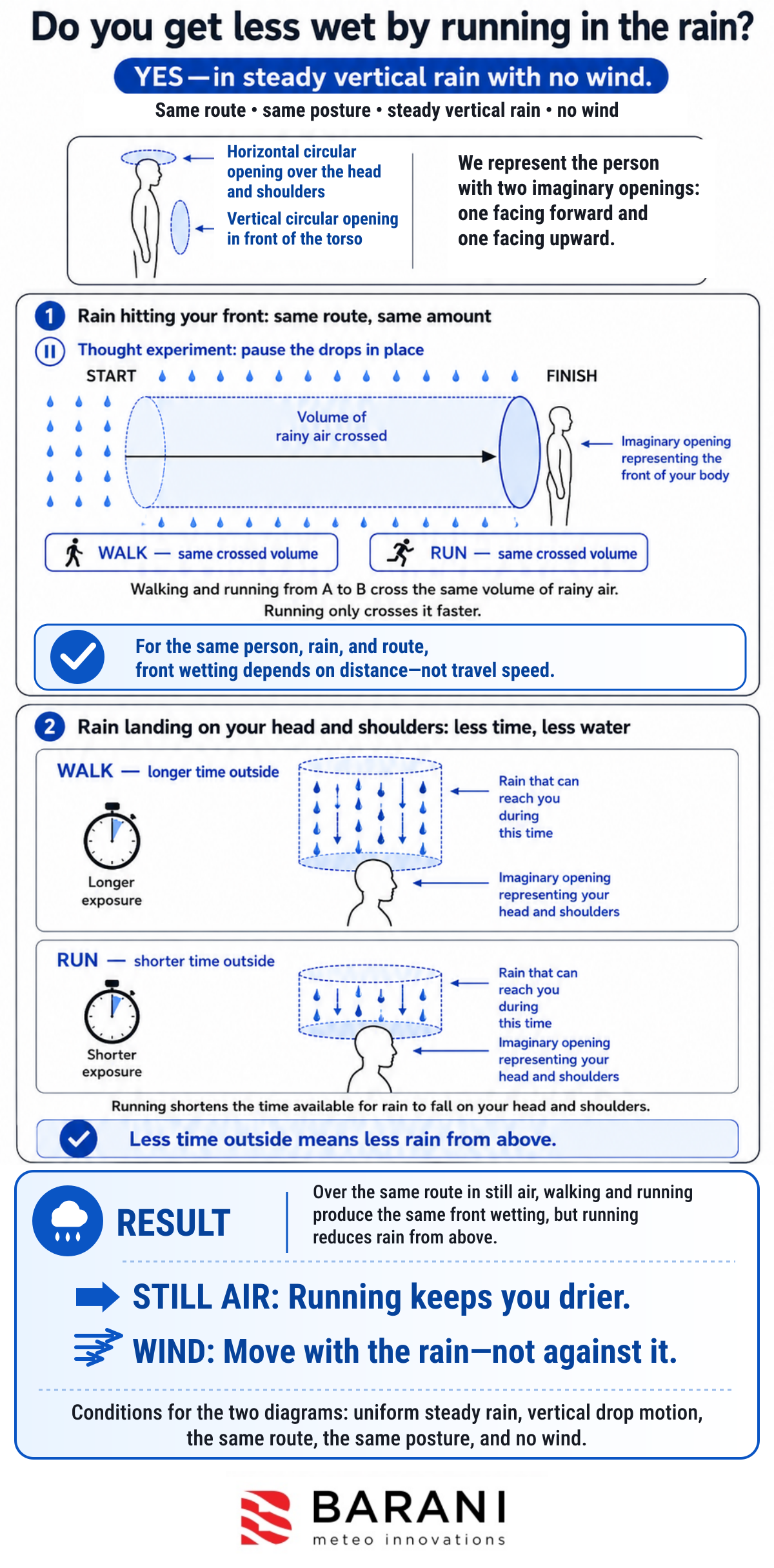
Figure 1. In steady vertical rain with no wind, walking and running over the same route cross the same volume of rainy air at the front. Running shortens the time in the rain, so less rain lands on the head and shoulders. In wind, move with the rain’s sideways drift rather than against it.
Why running helps in still air
Rain hitting your front
Walking and running over the same route carry the front of your body through the same volume of rainy air. Running encounters that rain faster but completes the route in less time. The fixed-route total remains the same.
Rain falling from above
Rain continues falling on your head and shoulders for as long as you remain outside. Running shortens that exposure time, so less rain can land from above.
What changes when there is wind?
Wind changes the answer. A headwind adds rain at your front. A tailwind reduces front wetting and can shift the rain impact to your back when the rain’s sideways drift is faster than you. When your route allows, move in the same direction as the rain’s sideways drift rather than against it. Matching the rain’s sideways speed and direction removes the front-or-back contribution along your route. Running rather than walking shortens your time in the rain, so less rain lands from above.
What else affects how wet you get?
This explanation counts direct rain striking your body. It does not predict exactly how much water clothing, hair, or shoes retain. Actual wetness also depends on posture, clothing absorption, runoff, evaporation, puddle splash, changing rainfall, turbulence, and nearby buildings or trees.
Conflict disclosure: Jan Barani is affiliated with BARANI DESIGN Technologies, a manufacturer of meteorological instruments. This person-wetting explanation is manufacturer-neutral and contains no product-performance claim.