BARANI Open Sourced Kafka Streaming Manifests for IoT Data Infrastructure

BARANI meteo innovations open sourced kafka data streaming architecture

At BARANI, accurate environmental measurement does not stop at the sensor. Our weather stations and meteorological sensors generate data that must move reliably from the field into systems where it can be stored, transformed, analyzed, and acted on. That requires more than hardware. It requires dependable data infrastructure.  

Today, we are open sourcing part of that infrastructure: our Kafka Platform Manifests repository.

The repository contains Kubernetes manifests for a Kafka-centered streaming platform built around Strimzi and related services. It is designed as a single, structured open-source repository with component directories for Kafka, Schema Registry, ksqlDB, Kafka Bridge, Debezium Connect, and Camel Connect.  

This is not a release of our business-specific stream-processing logic. Instead, it shares the deployment patterns, component wiring, and infrastructure manifests that can help teams build and operate similar streaming data platforms. The repository defines Kafka topics, ingestion paths, supporting services, and example CDC and webhook ingestion components, while keeping production application logic outside the public repository.  

Why we are sharing this

IoT and environmental monitoring systems generate continuous streams of data. For us, this means handling telemetry, webhook payloads, device-related events, database changes, and downstream processing stages in a way that is repeatable and maintainable.

But this challenge is not unique to BARANI. Nonprofits, NGOs, environmental protection organizations, research teams, citizen-science projects, municipalities, smart city teams, and resilient city initiatives often face the same need: they collect valuable environmental data from sensors, field devices, databases, and partner systems, but need reliable infrastructure to move that data where it can be analyzed and acted on.

Kafka is well suited for this kind of architecture because it gives teams a durable event backbone. Kubernetes gives us a practical way to deploy, version, and reason about that infrastructure as manifests. Strimzi then provides the Kubernetes-native operator layer for Kafka.

By publishing these manifests, we want to make our approach easier to inspect, adapt, and improve. More importantly, we want to give mission-driven teams a realistic starting point for building Kafka-based ingestion and streaming systems on Kubernetes.

Our hope is that this work can support organizations focused on climate resilience, environmental monitoring, conservation, disaster preparedness, sustainable agriculture, air-quality monitoring, water-resource management, smart city infrastructure, resilient city planning, and other projects that help protect our planet and strengthen communities.

Reliable environmental decisions depend on reliable environmental data. So do smarter, more resilient cities. By sharing part of our infrastructure openly, we want to help more teams spend less time rebuilding the same platform foundations and more time using data to understand, protect, and restore the natural world while building communities that are better prepared for the future.

What is included

The repository is organized into component directories, each with its own README and deployment guidance.  

Kafka core

The kafka/ directory includes raw Kubernetes manifests for a Strimzi-managed Apache Kafka cluster running in KRaft mode, plus an optional Kafka UI deployment. It includes manifests for the Kafka node pool, Kafka custom resource, Kafka user, Kafka rebalance resource, and Kafka UI.  

Schema Registry

The schema-registry/ directory contains manifests for deploying Confluent Schema Registry alongside the Kafka cluster. It includes deployment configuration, an in-cluster service on port 8081, and optional ingress with TLS and basic authentication.  

ksqlDB

The ksqldb/ directory contains manifests for a ksqlDB server, helper CLI pod, persistent volume claim, service, and optional ingress. This provides a foundation for querying and working with streams once data is flowing through Kafka.  

Kafka Bridge

The kafka-bridge/ directory includes manifests for deploying Strimzi Kafka Bridge, allowing HTTP-based access patterns where they are useful. The included manifests define the Kafka Bridge custom resource and optional ingress with TLS and basic authentication.  

Debezium Connect

The debezium-connect/ directory contains manifests for a Strimzi Kafka Connect cluster with the Debezium PostgreSQL connector, example topic definitions, an example PostgreSQL source connector, and least-privilege RBAC for reading database credentials from a Kubernetes Secret.  

Camel Connect

The camel-connect/ directory contains manifests for a Strimzi Kafka Connect cluster using the Camel Netty HTTP connector to receive webhook requests and publish them to Kafka topics. It includes connector resources, topics, services, ingress, network policy, an optional webhook logger, and a PlantUML topology source.  

How the pieces fit together

The baseline deployment order starts with Kafka, then optional platform services such as Schema Registry, ksqlDB, and Kafka Bridge, followed by integration components such as Debezium Connect and Camel Connect.  

That structure reflects a practical streaming architecture:

First, the Kafka cluster provides the event backbone.

Next, services such as Schema Registry and ksqlDB support schema management, stream inspection, and query workflows.

Finally, ingestion components bring data into Kafka from external systems. Debezium Connect is used for PostgreSQL change data capture examples, while Camel Connect is used for webhook ingestion examples.  

What you should customize before using it

These manifests are intended as a reusable starting point, not a one-command production deployment. The root README documents shared assumptions such as the kafka namespace, the kafka-kraft cluster name, the Kafka bootstrap service, SCRAM Secret name, placeholder ingress hosts under example.com, and node labels that satisfy affinity rules.  

Before applying the manifests in your own environment, review and replace ingress hostnames, image registry placeholders, Secret names and contents, storage classes and storage sizes, node labels and affinity rules, replication factors, and sizing defaults.  

Security-sensitive values are intentionally not committed. The repository is designed to avoid live secrets, and referenced secrets must be created separately in your Kubernetes cluster. Some manifests use SASL_PLAINTEXT as an internal example, with guidance to switch to TLS or SASL_SSL when encryption in transit is required.  

Why this matters for IoT and environmental data

Reliable meteorological and IoT systems are built from multiple layers. Sensors must measure accurately. Connectivity must be dependable. Data pipelines must preserve events, handle scale, and support downstream analysis.

Open sourcing this repository gives developers, integrators, and infrastructure teams a clearer look at one way to build the data-streaming layer behind such systems. It also helps separate reusable infrastructure from proprietary product and domain logic.

That separation matters. The repository provides platform manifests, example wiring, validation commands, deployment order, and component-specific documentation. It does not expose the full production logic that transforms raw events into final domain outputs.  

License and contributions

The repository is released under the MIT License, with copyright attributed to BARANI DESIGN Technologies.  

We welcome careful review and useful contributions. The contributing guidance asks contributors to keep changes focused on manifests, examples, validation, and documentation; avoid committing secrets, internal hostnames, internal IPs, or private registry references; and validate changed YAML files before submitting.

Security-sensitive reports should not be opened as public issues. The security policy asks reporters to use private vulnerability reporting, a private security advisory, or another private maintainer channel before disclosing details publicly.  

Explore the repository

You can find the open-source Kafka streaming manifests on GitHub. Review the README, inspect the component directories, adapt the placeholders for your environment, and use the manifests as a starting point for your own Kafka-based IoT or streaming data platform.

MeteoHelix® ready for Industry 4.0

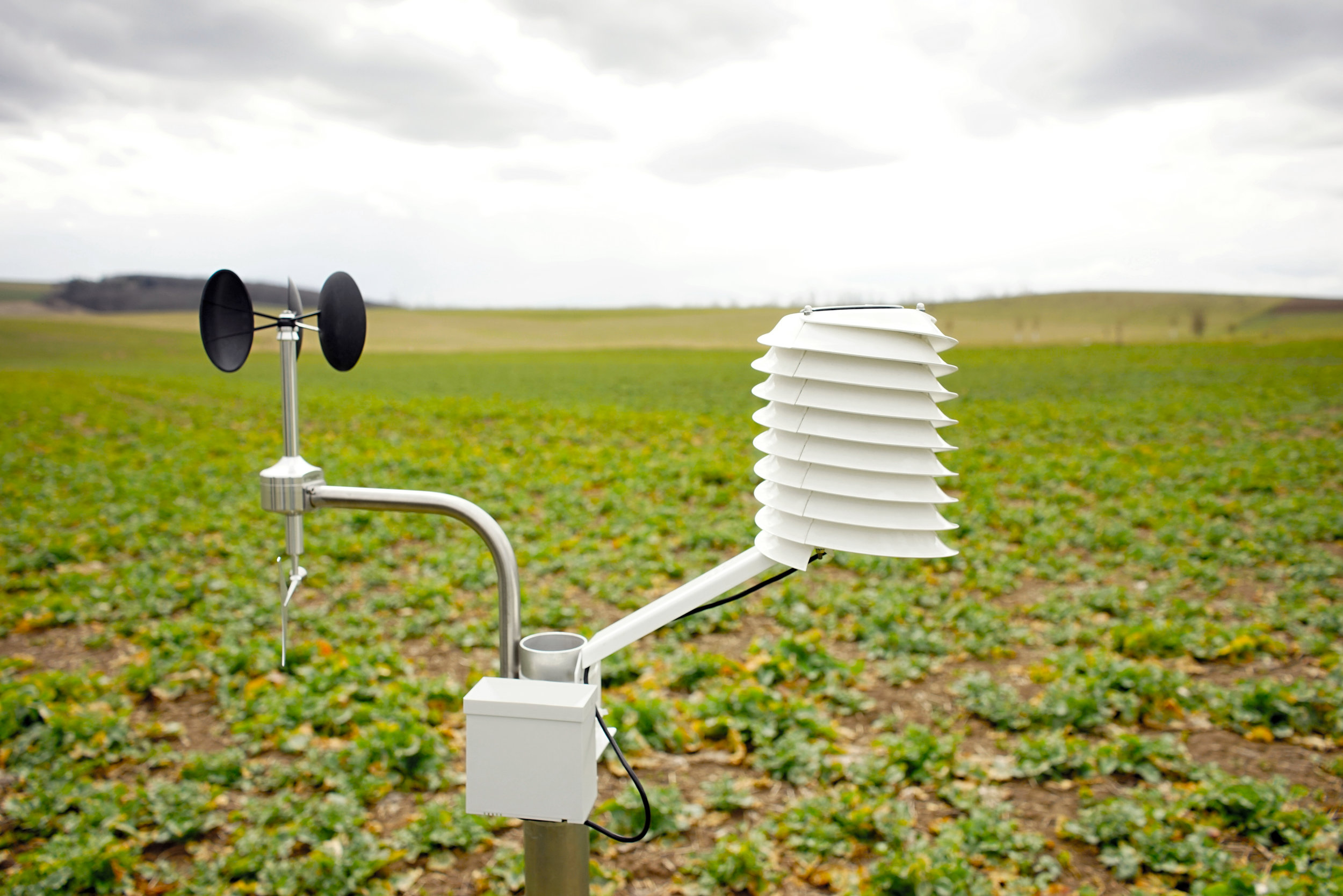
Agricultural weather station with a wind sensor, rain gauge and helical radiation shield

Agricultural weather station with a wind sensor, rain gauge and helical radiation shield

What is industry 4.0 and how does meteorological data fit into its picture?

In general, the fourth industrial revolution (Industry 4.0 for short) is widely accepted as the rise of connectivity following the computerization of manufacturing. For example, the term "Precision Agriculture" is one subset of the 3rd and 4th industrial revolutions, where the 3rd industrial revolution is all about computerization and widespread sensor adoption and the fourth is the rise of connectivity and its benefits. We are still in the middle of both of these industrial revolutions. The benefits of Industry 3.0 are clearly visible with sensors in everything from our cars to our household appliances, while the benefits of connectivity will become more and more noticeable in the years to come.

The rise of home weather stations

In meteorology one can see the widespread adoption of home weather stations as the result of Industry 3.0, while the rise of meteorological data sharing networks like Weather Underground as the beginnings of Industry 4.0.  The rise of precision agriculture is also the result of sensor adoption and started with the widespread use of weather stations in farming. It continues with the rise of software platforms that offer not only present weather data sharing and data processing, but are also able to combine this data with crop health and soil analyses to paint a more complete picture of current crop status and crop development.  This complete picture helps decision makers (agronomists in precision farming) make significantly more informed decisions and helps prevent wasteful use of water, fertilizer and chemical agents used to treat plant diseases and pest outbreaks.

Impact on professional meteorology

In professional meteorology the changes from the 3rd and 4th industrial revolution come slower. Scientists and meteorologists need to be sure that each new technology provides high-quality data and long-term data stability as climatic changes happen on a scale of a few thousands of a degree per year. Additionally, every new sensor technology needs to be thoroughly tested and compared to existing measurement instruments and techniques so as to ensure data continuity and consistency. In other words, professional applications of weather sensors cannot permit sensor differences to create false changes in long-term climatic measurement, where a change is temperature sensor technology would result in a step change in global temperature readings. One such new technology currently being evaluated by professionals around the world is the helical radiation shield for air temperature sensors which promises to significantly increase accuracy and reduce measurement uncertainty of any temperature sensor in outdoor applications. The impact of this helical solar shield technology found in the MeteoHelix® micro-weather stations from BARANI DESIGN Technologies may mean that tens of thousands of home weather stations throughout the world may in the near future be able to provide high-quality professional weather data used to improve local weather forecasts.