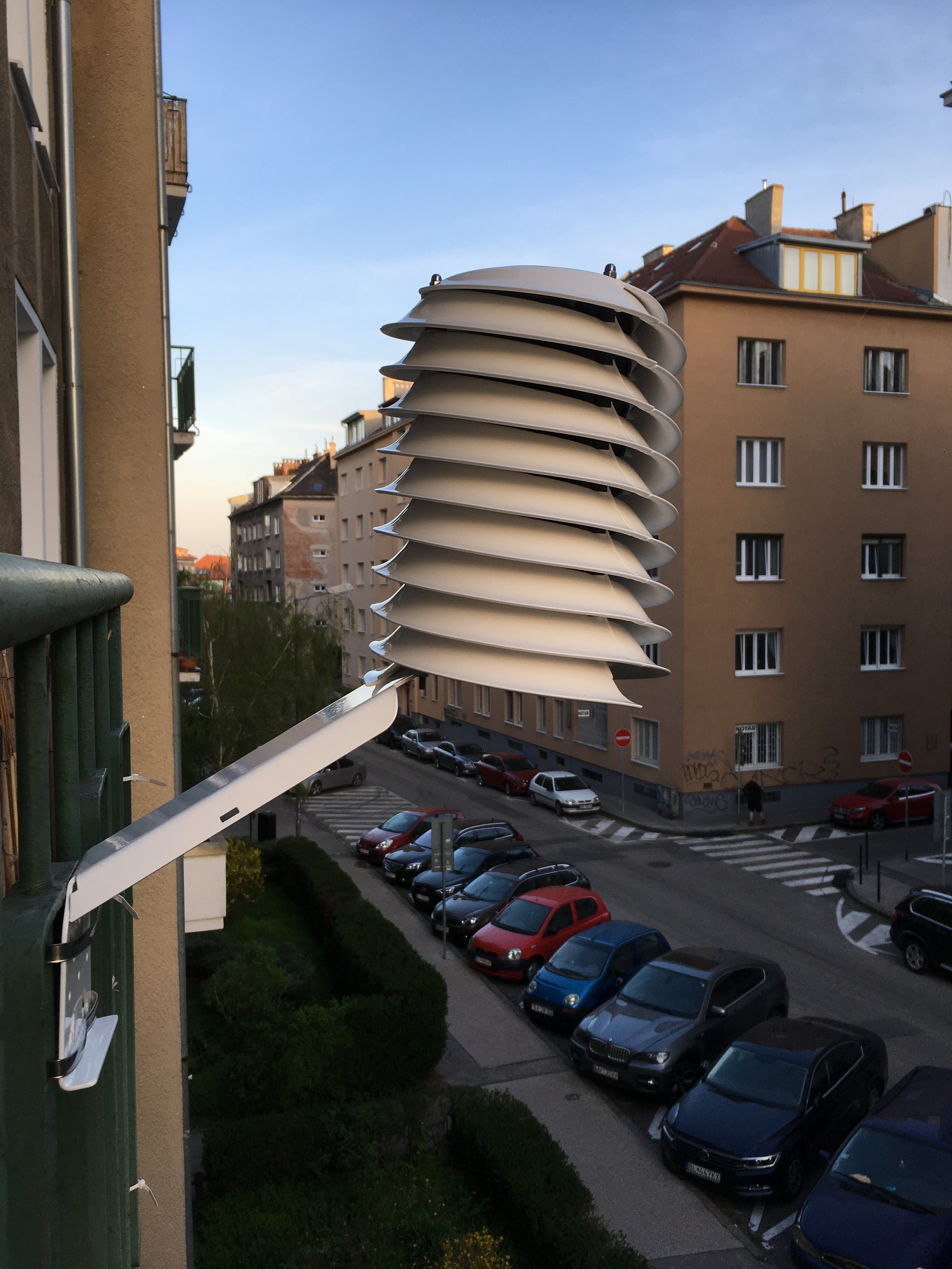

MeteoHelix® ready for Industry 4.0
/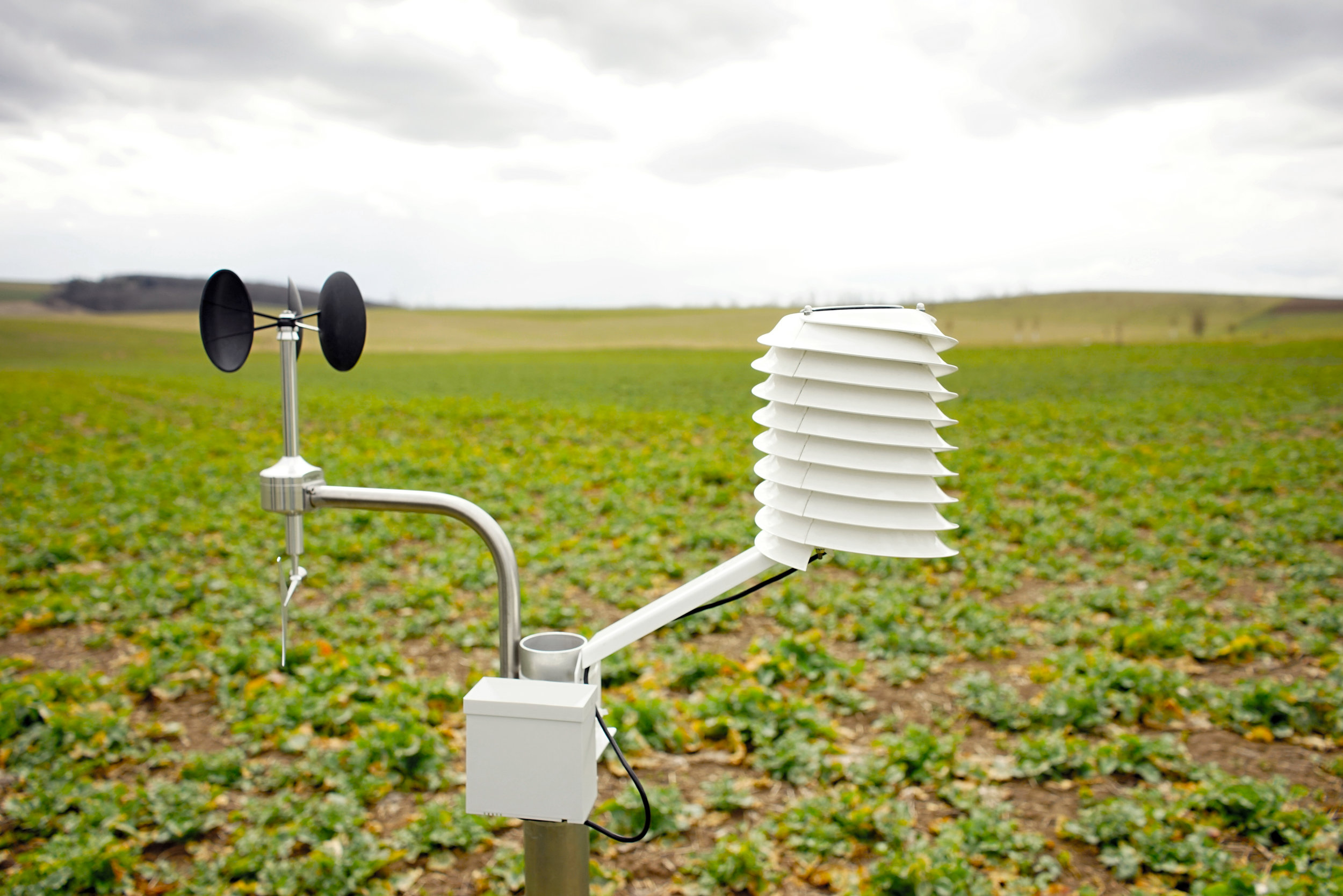
Agricultural weather station with a wind sensor, rain gauge and helical radiation shield
What is industry 4.0 and how does meteorological data fit into its picture?
In general, the fourth industrial revolution (Industry 4.0 for short) is widely accepted as the rise of connectivity following the computerization of manufacturing. For example, the term "Precision Agriculture" is one subset of the 3rd and 4th industrial revolutions, where the 3rd industrial revolution is all about computerization and widespread sensor adoption and the fourth is the rise of connectivity and its benefits. We are still in the middle of both of these industrial revolutions. The benefits of Industry 3.0 are clearly visible with sensors in everything from our cars to our household appliances, while the benefits of connectivity will become more and more noticeable in the years to come.
The rise of home weather stations
In meteorology one can see the widespread adoption of home weather stations as the result of Industry 3.0, while the rise of meteorological data sharing networks like Weather Underground as the beginnings of Industry 4.0. The rise of precision agriculture is also the result of sensor adoption and started with the widespread use of weather stations in farming. It continues with the rise of software platforms that offer not only present weather data sharing and data processing, but are also able to combine this data with crop health and soil analyses to paint a more complete picture of current crop status and crop development. This complete picture helps decision makers (agronomists in precision farming) make significantly more informed decisions and helps prevent wasteful use of water, fertilizer and chemical agents used to treat plant diseases and pest outbreaks.
Impact on professional meteorology
In professional meteorology the changes from the 3rd and 4th industrial revolution come slower. Scientists and meteorologists need to be sure that each new technology provides high-quality data and long-term data stability as climatic changes happen on a scale of a few thousands of a degree per year. Additionally, every new sensor technology needs to be thoroughly tested and compared to existing measurement instruments and techniques so as to ensure data continuity and consistency. In other words, professional applications of weather sensors cannot permit sensor differences to create false changes in long-term climatic measurement, where a change is temperature sensor technology would result in a step change in global temperature readings. One such new technology currently being evaluated by professionals around the world is the helical radiation shield for air temperature sensors which promises to significantly increase accuracy and reduce measurement uncertainty of any temperature sensor in outdoor applications. The impact of this helical solar shield technology found in the MeteoHelix® micro-weather stations from BARANI DESIGN Technologies may mean that tens of thousands of home weather stations throughout the world may in the near future be able to provide high-quality professional weather data used to improve local weather forecasts.